
April 01, 2026
Rules of Umrah: Complete Step-by-Step Guide for Pilgrims
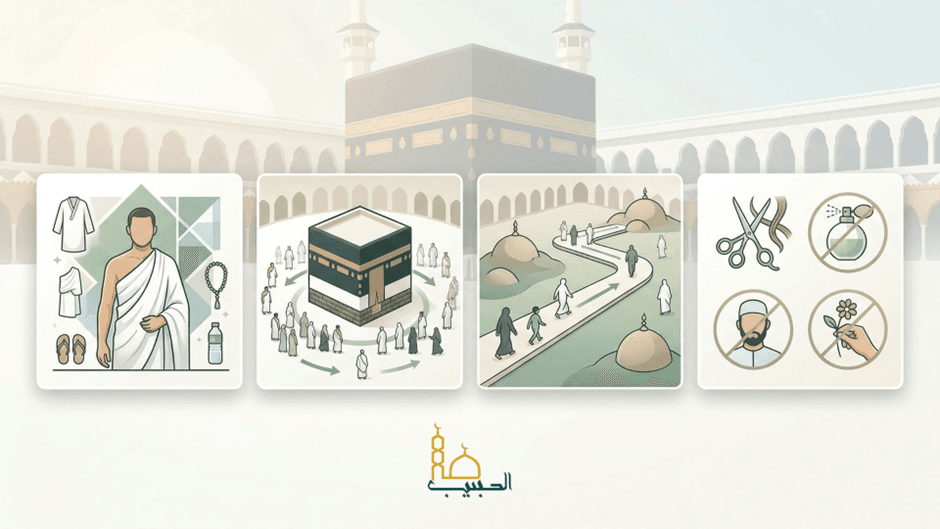
Performing Umrah is a deeply spiritual journey. It allows a Muslim to step away from daily life. You stand before the House of Allah with humility and devotion. Every moment feels meaningful and special. Umrah is not just a travel. It is an act of worship. It must be performed correctly. There are clear rules that every pilgrim must follow.
These rules help ensure your Umrah is valid. They also help you stay focused on worship. Without them, the journey can feel confusing. Whether it is your first trip or not, preparation is important. This guide explains everything clearly. You will learn the steps, rules, and practical tips. This will help you perform Umrah with ease and confidence.
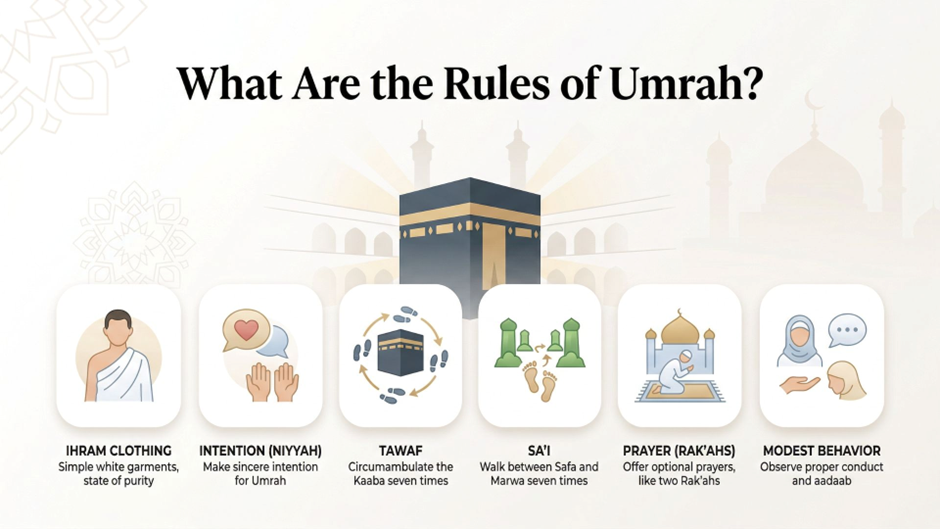
What Are the Rules of Umrah? (Quick Answer)
Along with these steps, pilgrims must follow strict rules, especially during Ihram, such as avoiding perfume, cutting hair, or engaging in arguments.
Basic Conditions Before Performing Umrah
Before performing Umrah, a person must meet certain basic Islamic requirements. Without these, the journey is not considered valid.
Faith and Eligibility
- Muslim: Only Muslims can perform Umrah
- Maturity (Baligh): Must have reached puberty (children can perform, but it is not obligatory)
- Sanity: Must be mentally sound and aware of the rituals
Financial Ability
- Financially Able: Must have a halal income to cover expenses
- Family Responsibility: Must leave enough support for dependents
- Debt Awareness: Should have a clear repayment plan if in debt
Travel Requirements
- Must be physically able to travel
- Must have valid documents (passport, visa)
- Must be able to complete the journey safely
Rules of Ihram (Main Restrictions During Umrah)
Ihram is a sacred state, and once you enter it, several normal activities become strictly forbidden.
General Restrictions (For Everyone)
- No cutting hair or nails
- No use of perfume or scented products
- No sexual activity or intimacy
- No arguments, fighting, or bad language
- No hunting or harming animals
Additional Rules for Men
- Must not wear stitched or fitted clothing
- Must not cover the head
- Must wear two white unstitched cloths
Additional Rules for Women
- Must wear modest, loose clothing
- Face and hands must remain uncovered
- No gloves or face veil touching the skin
Grooming Rules (Hair and Nails)
Personal grooming is strictly regulated during Umrah and varies by stage.
Before Entering Ihram (Preparation)
- Trim nails before Ihram
- Remove unwanted body hair
- Clean and prepare the body
"A time limit has been prescribed… it should not be neglected more than forty nights." — (Sahih Muslim)
During Ihram
- Cutting hair or nails is strictly prohibited
- If a nail breaks accidentally, only the damaged part can be trimmed
Rules for Completing Umrah (Hair Cutting)
To exit the Ihram, hair cutting is mandatory.
- For Men: Preferred: shave the head completely (Halq). Allowed: trim evenly (Taqsir).
- For Women: Cut a small portion of hair (about fingertip length).
This act symbolises humility and leaving behind worldly attachment.
Prohibited Actions During Umrah
To keep your Umrah valid and accepted, avoid these actions:
- Using perfume or scented items
- Cutting hair or nails intentionally
- Engaging in marital relations
- Fighting, arguing, or using abusive language
- Killing or harming animals
If any of these are broken intentionally, Fidya (penalty) may be required.
Why Following Umrah Rules Is Important
Following the rules of Umrah is an act of obedience to Allah. These rules:
- Ensure your Umrah is valid
- Maintain discipline and equality
- Create a peaceful environment for all pilgrims
- Help you focus fully on worship
What are Ihram, Tawaf, and Sa’i? (Key Concepts Explained)
These are the core acts of worship in Umrah. Every pilgrim must understand them before starting the journey, as they form the foundation of the entire pilgrimage.
What Is Ihram?
Ihram is a sacred state. A Muslim enters it before starting Umrah. It is not only about clothing. It is also a spiritual condition. Before crossing the Miqat, you make your intention (Niyyah). You also begin reciting the Talbiyah. From that moment, you are in Ihram. Certain actions now become restricted.
Men wear two white unstitched cloths. One covers the lower body. The other covers the upper body. Women wear loose and modest clothing. The face and hands remain uncovered.
While in Ihram, some actions are not allowed. You cannot use perfume. You cannot cut hair or nails. You must avoid arguments and bad behavior. This state teaches patience and equality. It helps you focus only on worship.
What Is Tawaf?
Tawaf is an important ritual of Umrah. It means circling the Kaaba seven times. This is done inside Masjid al-Haram in Makkah. Each round starts at the Black Stone. You walk in an anti-clockwise direction. The Kaaba must stay on your left side. Pilgrims move together in a steady flow.
During Tawaf, you make Dua. You remember Allah. You stay calm and focused. It is a time of deep connection. Tawaf also has a deeper meaning. It shows that Allah is the center of life. Just like everything revolves around a center, a believer revolves around faith. It is a powerful symbol of unity and submission.
What Is Sa’i?
Sa’i is another key ritual of Umrah. It involves walking between Safa and Marwah. You complete seven rounds in total. You begin at Safa. You walk to Marwah. This counts as one round. You then return. This continues until seven rounds are complete.
This act remembers Hajra (AS). She ran between these hills. She was searching for water for her son, Ismail (AS). Her faith was strong. Allah rewarded her with Zamzam water. Sa’i teaches an important lesson. You must make effort. You must also trust Allah. It reminds you to stay patient and hopeful.
Step-by-Step Rules of Performing Umrah
The Umrah pilgrimage consists of four essential steps. You cannot skip any of them. If you miss a step, your Umrah may not be complete.
1. Entering the State of Ihram
- Wear Ihram before Miqat
- Make your intention
- Start reciting Talbiyah
Now you are in Ihram. The rules begin. The journey starts with Ihram. This is more than just clothes; it is a "state of heart." You must make your intention and wear the required dress before crossing the Miqat (boundary). Once you say your intention, you are "in Ihram," and the restrictions begin. For a full travel guide, read our article on how to plan your Umrah package.
2. Performing Tawaf Around the Kaaba
- Start at the Black Stone
- Complete seven rounds
- Keep the Kaaba on your left
- Stay in Wudu
This is a time for prayer and reflection. Tawaf is the act of walking around the Kaaba seven times. This must be done in a state of Wudu (cleanliness). You start at the Black Stone and keep the Kaaba on your left. It is a time of deep prayer. You are like a planet orbiting the sun; Allah is the center of your universe. If you want to understand how the rituals differ, read our guide on the difference between Hajj and Umrah.
3. Completing Sa'i Between Safa and Marwah
- Walk between Safa and Marwah
- Complete seven rounds
- Men walk faster in marked areas
Keep making Dua during this step. Sa'i is walking seven times between the hills of Safa and Marwah. This commemorates the story of Hajra (AS), who ran between these hills looking for water for her baby, Ismail (AS). It shows that we must work hard and have hope in Allah's mercy.
4. Cutting Hair (Tahallul) to Complete Umrah
- Men shave or trim
- Women cut a small portion
Now your Umrah is complete. You leave Ihram. The final step is cutting the hair. This is called Tahallul. It signifies that you are now leaving the sacred state of Ihram. For men, this means shaving or trimming. For women, it is a small trim. Once the hair is cut, your Umrah is finished, and the normal rules of life return.
Ihram Rules Explained (Men & Women)
Ihram comes with strict rules that must be followed carefully.
Ihram Rules for Men
For men, the rules are very specific to ensure complete equality. Men must ensure they do not wear anything that is "tailored" to fit the body. This means no shirts, no trousers, and no underwear. This may feel strange at first, but it reminds us that we bring nothing into the grave except a white shroud.
Clothing Rules for Men in Ihram
The dress for men consists of two unstitched white sheets. One covers the lower body (Izat), and one covers the upper body (Rida). Your right shoulder should be uncovered only during Tawaf. Your footwear must not cover your ankles or the top part of your feet.
Actions Men Must Avoid in Ihram
Men must never cover their heads with a hat, cap, or even a hoodie. You can use an umbrella for shade, but it must not touch your head. You must also avoid any scented soaps or shampoos. We suggest buying "Hajj-safe" unscented kits before you leave the UK.
Ihram Rules for Ladies
The rules for women focus on modesty and simplicity while allowing for comfort. Unlike men, women do not wear the two white sheets. They wear their normal clothes. The clothes should be loose, clean, and not transparent. The main rule is that the clothes must cover the whole body except for the face and the hands.
Clothing Rules for Women During Umrah
Most women choose white or black abayas. The head must be covered with a scarf (Hijab). A very important Rule of Umrah for ladies is that the face must not be covered with a niqab or veil that touches the skin. The face must stay open before Allah.
Things Women Should Avoid in Ihram
Women must avoid using makeup or perfume. You should not wear gloves. Even if you usually wear jewelry, it is better to keep it very simple or remove it to stay in the spirit of humility.
Rules for Women, Children & the Elderly
Umrah is for everyone. Islam makes it easy for all people. Rules are adjusted based on ability. Special paths are available. Assistance is allowed. They can perform Umrah at their own pace.
Rules for Women
Mahram Rules for Women: Traditionally, women were required to travel with a Mahram for protection and help. This is based on the Hadith of the Prophet (PBUH) regarding long-distance travel.
Can Women Perform Umrah Without a Mahram?
In recent years, the Saudi government has allowed women over the age of 45 (and sometimes younger) to travel in "trusted groups" without a personal Mahram. However, rules change often. It is best to consult with us at Al Habib Travel to see the current visa requirements for your specific age and group.
Rules for Children
Children are allowed to perform Umrah, but it is not compulsory for them until they reach puberty (Baligh). Even though it is not an obligation, taking children for Umrah is highly rewarding for both the child and the parents.
- Parents or guardians guide children through the rituals such as Ihram, Tawaf, and Sa’i
- If a child is too young, the parent can make the intention (Niyyah) on their behalf
- Children are encouraged to follow the rules, but mistakes are excused
- There is no penalty (Fidya) if a child breaks any rule unintentionally
This experience helps children learn about faith, discipline, and worship from an early age, making it a meaningful spiritual journey for the whole family.
Rules for Elderly Pilgrims
Elderly pilgrims can perform Umrah with ease, as Islam allows flexibility for those with physical limitations. Their comfort, safety, and health are given priority.
- Wheelchairs and electric carts are available for Tawaf and Sa’i
- Special, separate paths and arrangements are provided to avoid heavy crowds
- Pilgrims can take rest breaks whenever needed during rituals
- Assistance from family members or guides is fully allowed
Islam does not place hardship on individuals. Elderly pilgrims can perform Umrah at their own pace while still gaining full spiritual reward.
Rules During Tawaf
Tawaf must be done carefully. You should stay focused and respectful. It is a sacred act.
- You must have Wudu
- Your body must be properly covered
- Complete all seven rounds
- Stay outside Hijr Ismail
If your Wudu breaks, stop. Renew it. Then continue your Tawaf.
Mistakes to Avoid
Do not push others. Do not rush dangerously. Avoid stopping suddenly in crowds. Touching the Black Stone is Sunnah. It is not required. Safety is more important. Respect others at all times.
Rules of Sa'i Between Safa and Marwah
Sa’i is easier than Tawaf. But you still need to follow some rules. Stay calm and focused.
- Complete seven rounds
- Start at Safa
- End at Marwah
- Avoid long breaks
Wudu is not required. But it is better to have it.
Etiquette
Make Dua during Sa’i. Avoid distractions. Do not use your phone too much. Stay humble and patient. Men walk faster between green lights. Women walk at a normal pace.
Penalties (Fidya) for Breaking Umrah Rules
If a rule is broken intentionally, a penalty (Fidya) may apply.
Options include:
- Feeding poor people
- Fasting for a few days
- Sacrificing an animal
If a mistake is accidental, ask Allah for forgiveness.
Practical Tips for UK Pilgrims
- Wear Ihram before Miqat (during flight)
- Carry unscented essentials
- Stay patient in crowds
- Choose cooler months for comfort
Preparation makes your journey easier and more focused.
Frequently Asked Questions About Umrah Rules
Final Thoughts on the Rules of Umrah
The rules of Umrah are designed to guide you, not make things difficult. They help create a peaceful and spiritual environment for every pilgrim. With the right preparation and understanding, your journey becomes easier and more meaningful. Focus on patience, sincerity, and devotion - and trust that Allah will accept your efforts.
May your Umrah be accepted and your journey filled with peace and blessings.
Planning your Pilgrimage?
Al Habib Travel specializes in creating meaningful experiences. Let us handle your visa and accommodation.