
June 2, 2026
Umrah Sins Forgiven: What Truly Happens to Your Sins After Umrah
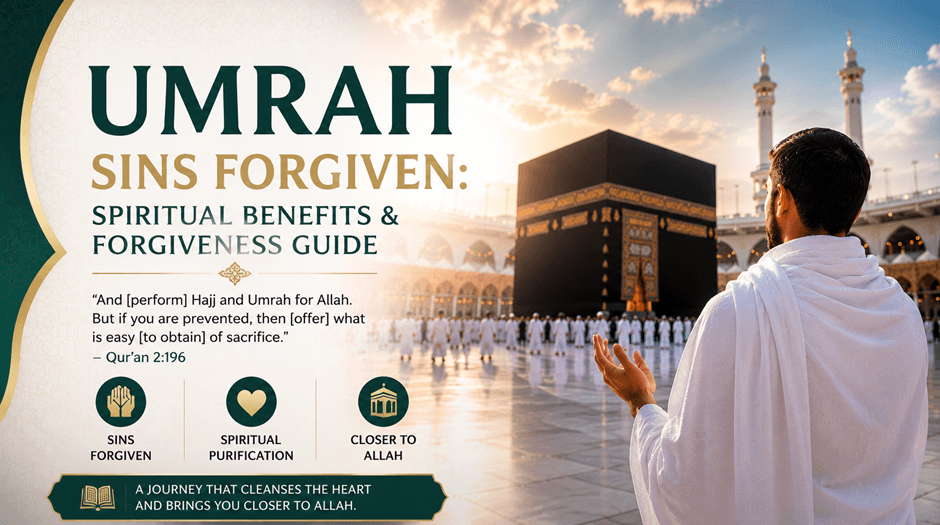
The question "are all your sins forgiven after Umrah" sits at the heart of every believer's spiritual journey. Many Muslims carry this hope, but clarity matters as much as hope. This guide explores what Umrah truly offers regarding forgiveness and how to maximize your spiritual rewards.
Does Umrah Erase All Sins?
If you ask, "Does Umrah erase all sins?" the answer from authentic hadith is yes, with important conditions. The Prophet Muhammad (peace be upon him) taught:
"The Hajj is mabrur (accepted), which has no reward less than Paradise."
— (Sahih Bukhari, Sahih Muslim)
"An Umrah to another Umrah is an expiation for what is between them."
— (Sahih Bukhari, Sahih Muslim)
This means that performing Umrah sincerely does erase sins committed between two Umrahs. So "does going to Umrah erase all sins" carries true weight when measured against your previous Umrah, not your entire lifetime.
Does Umrah Forgive Major Sins?
The question "Does Umrah forgive major sins?" deserves careful scholarly explanation. Major sins (kaba'ir) include adultery (zina), theft, false testimony, and similar grave violations.
Umrah offers expiation for sins in general, but major sins also require sincere repentance (tawbah) outside of pilgrimage. If you ask, "Does Umrah forgive zina" or similar major sins, understand that Umrah opens doors to mercy but does not replace the conditions of repentance. The believer must:
- Feel genuine remorse
- Stop committing the sin
- Resolve not to return
- Make a sincere dua for forgiveness
Then, Umrah becomes a powerful expiator alongside this true repentance.
Does Umrah Clear All Sins?
Pilgrims asking "Does Umrah clear all sins?" should reflect on what scholars call "the mabrur Umrah effect." The Prophet (peace be upon him) emphasized the mabrur (accepted) quality, and this acceptance depends on:
- Sincerity (ikhlas)
- Halal earnings fund the trip
- Avoiding argumentation and sins during rituals
- Following every ruling correctly
- Pure intentions throughout
Does Umrah Remove All Sins from Your Life?
When Muslims wonder, "Does Umrah remove all sins?" the deeper question becomes: what remains after Umrah?
The answer is simple: fresh chances and renewed motivation to avoid sin. Umrah does not guarantee permanent immunity from future sins, but it grants a spiritual reset. After Umrah, you become a newborn in terms of spiritual cleanliness. The slate is wiped clean, and your path forward becomes brighter. This is the blessing Umrah offers.
Are Duas Accepted in Umrah?
A beloved question is "Are duas accepted in Umrah?" The answer is a resounding yes, with conditions specific to sacred time and place. Scholars agree that:
- Last third of every night
- Specific times at the Kaaba
- Standing in Arafah (although this is Hajj)
- Between Safa and Marwah during Sa'i
- At Maqam Ibrahim after Tawaf
...represent blessed moments for dua acceptance. Umrah pilgrims should seize these opportunities. The Prophet (peace be upon him) said:
"The best of places to make dua is Arafat, then the Kaaba."
— (Ahmad)
Whatever worry or hope fills your heart, Umrah gives you unrestricted access to Allah through His blessed places.
Does Allah Call You for Umrah?
A beautiful concept in Islamic tradition is "Does Allah call you for Umrah?" Many scholars and travelers testify that the Umrah invitation arrives through specific life events:
- A sudden financial change
- A serious illness recovery
- A meaningful dream
- An unexpected travel opportunity
- Moments of deep yearning for Allah
When these occur, and Umrah becomes possible, believers recognize it as Allah's invitation. Acting on this call carries tremendous reward.
Does Allah Invite You to Umrah?
The phrase "does Allah invite you to Umrah" mirrors the hadith about Allah announcing to angels those performing Hajj and Umrah. Allah says:
"I declare unto you three things: your speech to Me, your glorification of Me, and your request to Me. I shall surely give it to you."
— (Musnad Ahmad)
This hadith confirms that when pilgrims journey to His House, Allah Himself acknowledges and welcomes them. Every Umrah prayer, every Tawaf, every Sa'i step happens under divine attention and acceptance.
May Allah Accept Your Umrah – Meaning Behind This Phrase
When someone says, "May Allah accept your Umrah," they call upon a powerful prophetic tradition. The Prophet Ibrahim (peace be upon him) supplicated in the Quran:
"Rabbana taqabbal minna innaka antas-Sami'ul-Alim."
"Our Lord, accept from us. Indeed, you are the Hearing, the Knowing." — (Quran 2:127)
Pilgrims returning from Umrah invoke this dua. Friends and family repeat it at arrivals and farewells. Saying this phrase reflects sincere hope that Allah rewards the physical effort, financial sacrifice, and spiritual devotion of every pilgrim.
Does Umrah Wash Away Sins Like Hajj?
Some pilgrims compare Umrah and Hajj regarding forgiveness. While both carry immense rewards, scholars categorize them differently:
- Hajj is obligatory once in a lifetime for those able to perform it. It forgives all major and minor sins completely and grants Paradise potential.
- Umrah is voluntary and can be performed multiple times. It expiates sins between two Umrahs, with the mabrur Umrah being the most powerful.
Both journeys are gifts of immense mercy. Neither should be delayed when opportunity arises. The reward from Allah is never delayed beyond its time.
Spiritual Benefits Beyond Forgiveness
Beyond sin forgiveness, Umrah delivers numerous spiritual benefits:
- Renewed Iman (Faith)Standing in front of the Kaaba refreshes your relationship with Allah.
- Calm Heart and MindTawaf's repetitive motion soothes the soul.
- Divine LightBeing at the Sacred Mosque fills the heart with noor (spiritual light).
- Closer Ties with FamilyWhen family travels together, bonds deepen.
- Gratitude for IslamSeeing fellow pilgrims worldwide reinforces the blessings of being Muslim.
- Freedom from AttachmentsLeaving worldly comforts behind teaches reliance on Allah alone.
Common Misconceptions About Umrah Forgiveness
Many misunderstandings surround Umrah forgiveness. Let us clear them up:
- Misconception 1: Umrah forgives others' sins committed on your behalf.
No. Only your own sins are erased.
- Misconception 2: Umrah guarantees Paradise without extra effort.
Umrah removes prior sins, but Paradise requires ongoing good deeds.
- Misconception 3: Wealth-based Umrah carries more reward.
Intent matters more than money spent.
- Misconception 4: One Umrah erases all crimes, including those unpunished by law.
Major sins require sincere tawbah first.
- Misconception 5: Sins return immediately after returning home.
Umrah creates spiritual protection but requires ongoing vigilance.
How to Maximize Umrah Forgiveness
If you want maximum forgiveness from your Umrah:
- Repent sincerely before departure: Make comprehensive tawbah before flying.
- Keep the trip halal-funded: Ensure every pound spent comes from lawful earnings.
- Avoid sins during travel: Stay away from arguments, dishonest deals, and un-Islamic entertainment.
- Stay focused spiritually: Minimize shopping, tours, and sightseeing.
- Pray with khushu (humility): Quality worship matters more than rushed rituals.
- Make abundant dua: Use every sacred moment for heartfelt supplication.
- Cry in front of Allah: Tears at Maqam Ibrahim or during Tawaf carry special power.
- Visit Madinah with proper adab: The Prophet (peace be upon him) said visiting him after death is like visiting him alive. Duas at his grave are special.
- Read the Quran with reflection: Reading even a few verses with a translation matters greatly.
- Give charity before and after Umrah: Sadaqah multiplies reward.
The True Sign of Accepted Umrah
What reveals that your Umrah was accepted? Scholars point to signs:
- Returning home as a better Muslim
- Increased desire for prayer, fasting, and charity
- Reduced attraction to sins
- Heightened gratitude for Islam
- Stronger love for the Kaaba and prophets
- Better treatment of the family
If these signs appear after Umrah, consider your pilgrimage accepted. The Prophet (peace be upon him) said:
"From whom Allah protects his eyes in these two sacred places, He will surely admit him to Paradise."
— (Ahmad, Tirmidhi)
Why Umrah Forgiveness Is Guaranteed but Conditional
Allah's promise of forgiveness through Umrah is sure but conditional. The conditions include:
- Sincerity: Pilgrims must travel for Allah alone, not for show.
- Following Sunnah: Each ritual should follow prophetic practice.
- Halal Lifestyle: Maintain lawful conduct during the trip.
- Continued Repentance: The journey begins with tawbah that should continue afterward.
- Gratitude: Thank Allah for the opportunity upon return.
When these conditions align, Umrah forgiveness flows genuinely into your Record of Deeds.
Final Thoughts on Umrah Forgiveness
So, does Umrah forgive all sins? Yes, between two Umrahs and within the broader framework of sincere repentance. Does Umrah erase major sins alone? No, but Umrah combined with genuine tawbah offers complete cleansing. Are duas accepted in Umrah? Indeed, yes, and the sacred timing and location amplify your chances.
Allah invites you to Umrah when readiness aligns with opportunity. Saying "May Allah accept your Umrah" invokes divine mercy upon the pilgrim while enriching the speaker's own spiritual state.
For more guidance on planning your Umrah journey and ensuring the most rewarding pilgrimage, visit our Umrah travel agency today. You can review current options and seasonal pricing on our Umrah packages page. For travelers planning specific departure months, our September Umrah packages and October Umrah packages showcase excellent value with comfortable accommodations near the Haram.
May Allah accept your Umrah, forgive your sins, and grant you peace of heart and Paradise as your final home. Ameen.
Common Questions Answered Quickly
Planning your Pilgrimage?
Al Habib Travel specializes in creating meaningful experiences. Let us handle your visa and accommodation.